Showing posts with label Gen. Bradley. Show all posts

Sunday, August 7, 2011

JOAN BLAIR FOLLOW UP INTERVIEW

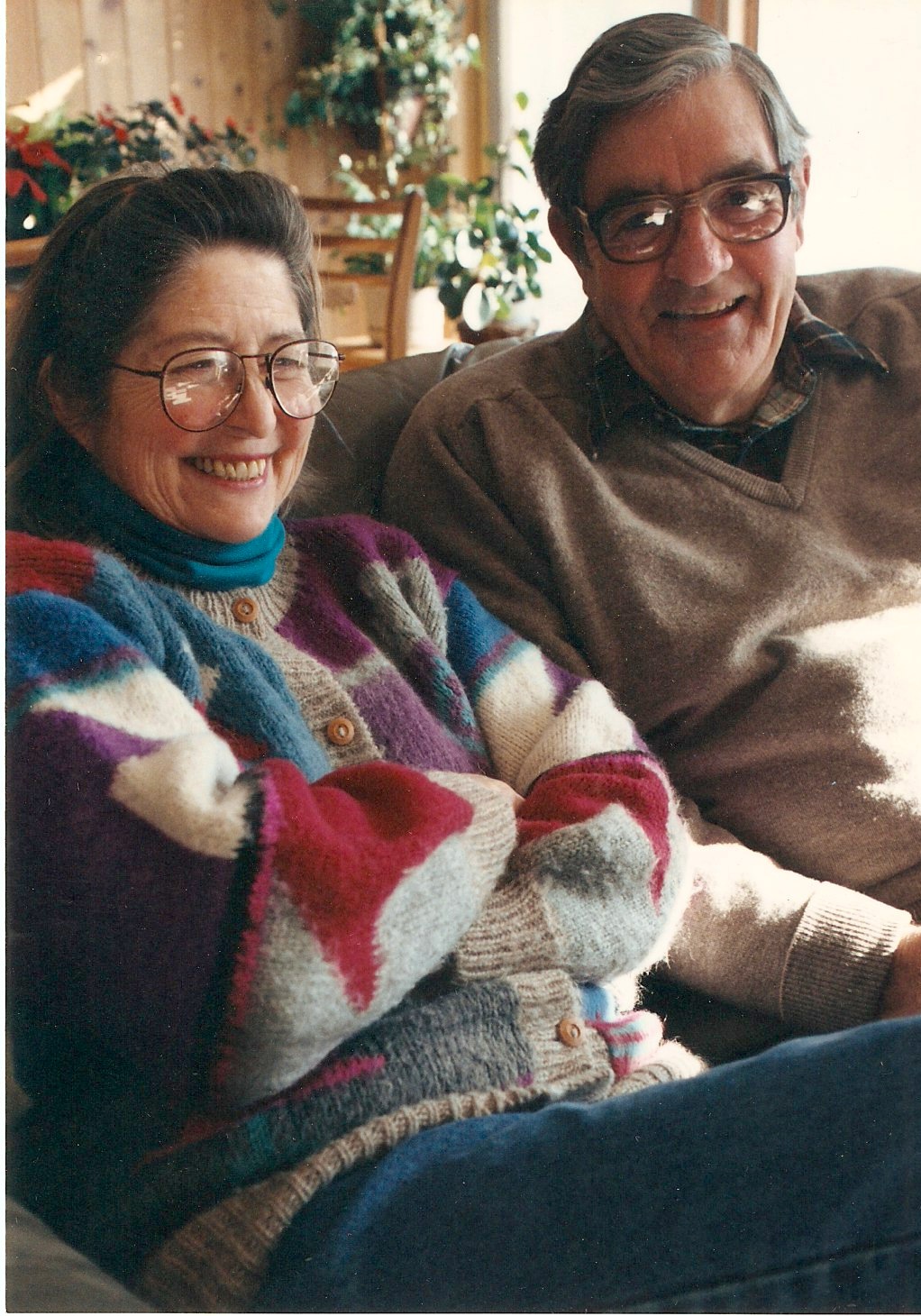
Joan Blair holding the U-Boat books she 
referred to as "her babies."


WASHINGTON ISLAND,
WISCONSIN -


[Note:  To the recent series of pieces on the Joan and Clay Blair interview, I add this post of a recent, follow-up conversation with Joan to learn about their writing career after our 1994 interview. Clay had alluded to a new contract for another book, which, as it turns out, split the voluminous material into two books.  As Joan said to me, "You can barely pick up one book with one hand.  Imagine if this were all one book!"  
Joan and Clay had continued working on the Hitler U-boat book, to later be published by Random House as two books:  The Hunters 1939-1942, and  The Hunted 1942-1945.
  - DP

Q – I think that doing the transcript of our 1994 interview reopened my eyes as to all the work you did together.  It also really impressed me with the amount of detail.
  
Joan -  Yes, that was Clay’s hallmark.  He went into every single, the most minute, detail about everything.  He used to drive me crazy sometimes!  I’d say, let’s don’t do things to free the world again. 

Q – There are those who write history and do it well, but to tackle  a subject with all of the detail…even if you have all of the information in your lap, which it wasn’t…to assemble that huge project.  How do you make sense of all that?  And from Clay’s quotes, he didn’t know, either.  It’s innate, I guess, is what it is.

Joan -  Most of this was before we had a computer.  In fact, we didn’t get a computer until we had a U-Boat book.   So he would write facts, dates, everything on 3 x 5 cards.

Q – He had given me these (manila file folders with samples of U-boat movements, etc.), and said, “This is the kind of thing..”

Joan -  And then he’d collate all the cards, and then he’d write it out, longhand. 

Q – But even to do that from this, he’d have to know the story, and had an idea where he was going.  So much detail to not get confused or completely befuddled in the process.

Joan – Right.   No he was really a detail (person).  He learned that as a reporter for Time-Life, and Saturday Evening Post.  “Always ask the next question,” he used to say.

Q – And that was also clear in the tapes that he was thinking about other projects, some of which would just pop up.  Or others that made sense out of what he already had.

At the point I had met with you in 1994, you were about to finish the U-boat book.   What took place after that?

Joan – We didn’t actually finish the U-boat book (then).  The second one didn’t come out until 1998, and that was …He did manage to see both books on book store shelves just before he died on a trip to Washington.

Q – What is the difference between the two books?  The titles are similar.

Joan -  The first book is The Hunters, and that’s the first part of the war, from ’39 to ’42, when the U-boats were all over the place, rampaging around, and we hadn’t figured out how to stop them yet.   Then the second book was called the Hunted, ’42 to’45, and that’s when the Allies really got on the offensive.

Q -  So when I spoke with you in ’94, that decision had not been made, or hadn’t officially been made?

Joan – Probably not.  But look at it, how could you make one book out of that?  (Pointing to the two volumes.) 

Q -  They’re enormous!   Do you look back at that and wonder how you did it?

Joan -  Absolutely!  It took so long, we worked on that book for so long, over ten years between the two of them.   We consider it all sort of one.  

Q – Was there anything else (that might have been on the forefront) as this was going to press?   On the horizon?

Joan -  Yes.  In fact, we even had a contract that was on a book about the Americans who helped break the codes and then what they did after the war.   They were inventors who went into computers, all of that, and we had started researching that. 

Q – Kind of related work, but not for the military, right?

Joan -  Right. Not military at all.

Q – If you had a computer in 1994, would it have helped?  Wouldn’t it have been a nightmarish thing?  There was no program that would have helped, other than the typing?

Joan -  Right.  But that helped enormously.  (Before the computer) Clay would make a correction on a page, and I would have to retype the whole thing all over again. 

Q – You had an electric typewriter which had a little capability...

Joan -  A computer saved my life!

Q – If there was any particular book or subject matter that interested you most, would you have preferred that to military history?  Military wasn’t your background, although you had worked for the government.  Was that a natural fit for you?

Joan –  I was just fascinated by any...all of it.  I became interested in the knowledge about submarines, for instance, WWII.   I loved it all, and the research.  The research was really fun.  The interviews, while they were going on, were wonderful.  They we’d go home and I’d have to transcribe all of them.
 
Q – Fascinating characters, people who were at the pinnacle world wide of their careers, their military careers?

Joan – Oh yes, we interviewed some fantastic people, like the military guys, Gen. Westmoreland, Ridgway, Gavin, Ambassador Harriman, and in the Bradley book…and all kinds of people Mrs. Bradley wanted us to interview who had absolutely nothing to do with his life!  But, yes, it was fascinating, it really was.

Q – For most of those interviews you would travel to the homes and accommodate the person you were interviewing? 

Joan -  Yes.

Q -   A tremendous amount of travel and time spent in travel? 

Joan – Yes. 

Q – Anything else you’d care to add?   Was this how you thought you might spend your career?

Joan -  Well, yes, I guess I did.  What Clay did.

Q – If I remember correctly, your mother (Jean Rutledge, who often wrote book reviews for the Island paper) loved books.

Joan -  Oh yes…Mother and Daddy were both avid readers.  So we grew up with books and reading. 

*****
The two additional books that were not listed in the Part VII listing:

Hitler’s U-Boat War:  The Hunters 1939-42, Clay Blair   (Random House, 809 pages)
Hitler’s U-Boat War:  The Hunted 1942-45,  Clay Blair   (Random House, 909 pages)

  -  Dick Purinton

Friday, August 5, 2011

BLAIR INTERVIEW - PART VII

WASHINGTON ISLAND, WISCONSIN -

Note:  This is the last installment of the 1994 interview.  Following is a list of published books by Clay Blair or Clay and Joan Blair, incomplete, but which I hope to update, along with a short piece based on recent conversations with Joan Blair.
 - DP


BLAIR INTERVIEW - 
PART VII  (Feb. 1994)


Q -  Do you have thoughts of any projects beyond this one?  
  
Clay -  But I wouldn’t like to talk about it.   I will tell you that we signed a contract for a new book.  

Q -  I was just curious whether you’re exhausted  after something like this, or if it reenergizes you when you finish a book?   Your not inclined to sit around, given your past record.

Clay -  Its fair to say I’m a Type-A workaholic. 
 
Joan -  Yes!

Clay -  And so you can see, we’re not apt to sit around and enjoy retirement.

Joan -  We can’t even go on vacation! 

Clay -  That’s not true.   Last year we went on vacation!  

Joan -  But we didn’t just sit around.  We had to be doing something. 

Clay – Last year we went down to Florida, and we didn’t do anything.

Joan -  Oh yes we did!  Every single day.  We interviewed people.

Clay -  That’s right, we did.   I can’t help that.

Q – What is your feeling about this book (U-boat book)?

You must feel good about it.  First of all, being done with it, but any thoughts as to how it might be received?    You said you’re pleased, not that it becomes the definitive work on U-boats in Atlantic submarine activities, but that there were interesting things you found out that might change the view point of history?  

Clay -  I think the battle of the Atlantic was an epic part of WWII.  No matter how you slice it, whether U-boats were effective or not.  It was a huge thing without precedent in all history that linked the battle, the number of ships on both sides, the incredible effort at scientific that otherwise went into both sides.   The back-and-forth, weapons, counter weapons, was immense.  

The wrong spin has been put on that battle, and so we’re putting a new spin on it.  It would be my belief and hope that nobody could write about this war again without taking our point of view.  Because it really is the first…what is it Joan?  The first what?   

Joan – Nobody has ever gone through the whole war, patrol by patrol with the U-boats, and looked at the whole thing, the whole war, and come up with reasons why this didn’t work or that didn’t work.  
Most books, it's “Gee whiz, this many U-boats went out and sank all these many ships, and this was how they did it."

Clay -   "Gee whiz!"  Is right.

There are two kinds of journalism I learned in school:  There’s Gee-whiz Journalism, and there’s Aw-shit Journalism.   And this is…Aw-shit!  

That’s the one thing I learned from that journalism professor.   

Now, I’ll give you an example.   I’ve been reading this book by David Halberstam who wrote The Best and the Brightest and a lot of other good books.  He did a book on the 50s.   He’s got a chapter on the Korean War.    And he has relied almost entirely on Ridgway’s Paratroopers for background on Ridgway and The Forgotten War, in his chapter notes where he’s citing sources. 

Q -  Are you looking forward to getting back into something, Joan?  Or are you looking forward to that vacation?

Joan – (Popping popcorn while Clay leaves room.) 

There’s no sense looking forward to a vacation, because there ain’t gonna be one! 
 
Q -  There are only a few minutes left (on tape).  Is there any type (statement) of an overview? 
You’ve done these defense books.  You’re a veteran of WWII.   Many, maybe all, of the subjects have been about WWII that you’ve written about ...

Clay -  The Korean War.

Q – Yes, and even that book had key players from WWII.

Clay – That’s true.

Q -  For the first time we now have a president (Clinton) who was not of that generation.    What sort of differences do you see in the future, a different generation certainly that was involved in WWII than we see today?   Any overall comments?

Clay -  I think when our generation was going off to war, we were definitely afraid that Hitler and Mussolini and Tojo were going to conquer the world.  And there was every expectation that they were going to do that. 

So when we Americans, our generation, got into the war, we thought we were fighting to save the world against a great peril.  We all went charging off like knights.  I call it a crusade.   It had this ‘All or Nothing’ feel about it, and this attitude spilled over into the Cold War.   In other words, our generation thinking, “Well, here we are again, back in another all-or-nothing deal with the communists, and if we don’t do this or do that, they’re going to take us over just like Hitler, Tojo or Mussolini might have.”  

And so our attitudes developed in WWII carried us into the Cold War, our generation, and so we said, in apocalyptic terms, its “either/or.”   You know, either they’re gonna win, or we’re gonna win.  But now, the Soviets have collapsed of their own mismanagement, I think more so than anything we did.   Since they collapsed, we don’t have this all-or-nothing threat.   I don’t see it anywhere.  

So I think the world goes into a whole new era of relations and history that your generation will take over without that all-or-nothing feeling, probably, so that on the one hand its wonderful not to have to face the possibility, real or imagined, that its all-or-nothing.  But then, on the other hand, that was a great organizing principle, this threat, and now it's disappeared, and I see a tendency that everybody seems to be floundering:    What are we doing?   What is the purpose in life?  What is the purpose of our country?  Should we be policing the world?  Bosnia, Somalia…what is it we’re supposed to be doing? 

And I think that fact, plus it’s radically, absolutely changing the complexion of the population of this country…the influx of Latins, Asians, and so forth…who are of a different mindset from, let’s say, the old establishment, and the changes that will ensue from democracy.   It’s going to fragment us further.

Q – Do you see people today of the same stature as Bradley, Ridgeway, or anyone else you want to cite?

 Clay -  No.  George C. Marshall, who was the head of the army in WWII, Eisenhower, Nimitz,  King - head of the Navy in WWII...  people of that stature, maybe its because they had epic jobs to perform, they assumed epic proportions in our mind. 

Q -   Certainly not Schwarzkopf, you wouldn’t put him on the same page as Bradley? (Schwarzkopf had been rumored to be considered for 5-star promotion following the first Gulf War).

Clay -  No, I would not. 
 
And the publicity machines are bigger now, and people achieve instant fame sooner.   Often undeserved.   No, I certainly wouldn’t.  I’d put him (Schwartzkopf) on par with a lot of division commanders in WWII, not army commanders.  
 
The changing democracy, the unsettled role that America should be playing in the world, I think it makes a very unsettling future for you people, your generation.

End - February 1994 Interview 

Addendum:

LIST OF PUBLISHED BOOKS BY CLAY BLAIR; CLAY AND JOAN BLAIR

1.     The Atomic Submarine and Admiral Rickover (Henry Holt, 1954). 
A crusading biography which led to Rickover’s retention in the Navy.
2.     The Hydrogen Bomb, Clay Blair and David Shepley (David McKay, 1954).
The weapon and the policy debate between Teller and Oppenheimer.
3.     Beyond Courage (David McKay, 1955).
Tales of escape and evasion in Korea about Air Force pilots.
4.     Valley of the Shadow, by Major Ward Millar (ghosted by Clay Blair) (David
McKay, 1955).  A single escape and evasion tale told by an Air Force pilot in the Korean War.
5.     Nautilus 90 North, by Commander William R. Anderson and Clay Blair
(World, 1959).   Story of the Nautilus’ voyage beneath the North Pole. 
6.     Diving for Pleasure and Treasure (World, 1960).   Adventure tale of the
Discovery of a Spanish galleon wreck in Yucatan.
7.     Always Another Dawn, by Scott A. Crossfield and Clay Blair (World, 1960).
Autobiography of the first X-15 pilot with a history of all experimental aircraft at Edwards Air Force Base.
8.     The Voyage of the Nina II, by Robert Marx (ghosted by Clay Blair)
(World, 1963).  In the footsteps of Columbus with a replica of the Nina.
9.     The Board Room (E.P. Dutton, 1969).  A novel set in the magazine industry.
10. The Strange Case of James Earl Ray (Bantam, 1969).  Biography of Martin Luther King’s assassin.
11. The Archbishop (World, 1970).  A novel about the winds of change in the Catholic Church.
12. Pentagon Country  (McGraw-Hill, 1971).  A novel about a senior Navy captain
and his anti-war son.
13. Survive!  (Berkley, 1973).   Story of the Uruguayan rugby team that crashed in the Andes.
14.    Silent Victory:  The U.S. Submarine War Against Japan (J.B. Lippencott, 1975).  A definitive work.  A Main Selection of the History, Military and Playboy Book Clubs.
15.   The Search for J.F.K., by Clay and Joan Blair (Berkley, 1976).  A close biography of J.F.K.’s younger years, debunking the myths.
16.   MacArthur (Doubleday, 1977).  A biography.
17. Scuba! By clay and Joan Blair (Bantam, 1977).   An adventure novel set in the Bahamas.
18.    Combat Patrol  (Bantam, 1978).   An action-oriented condensed version of Silent Victory in paperback.
19.     Return from the River Kwai, by Clay and Joan Blair (Simon & Schuster, 1979).   Non-fiction account of what happened to the British and Australian POWs after they built the Burma-Thailand railroad. 
20.    Mission Tokyo Bay, by Clay and Joan Blair (Bantam, 1980).   World War II adventure novel about the submarine war.
21. Swordray’s First Three Patrols, by Clay and Joan Blair. (Bantam, 1980).  World War II adventure novel about the submarine war.
22. A General’s Life, by General of the Army Omar N. Bradley and Clay Blair (Simon & Schuster, 1983).   Bradley’s autobiography, enhanced by independent Blair research.
23. Ridgway’s Paratroopers (Dial, 1985).   A history of the American airborne in World War II.
24. Korea:  The Forgotten War  (times books, 1987).    A definitive work.
     
[Note:  List is current only through 1993]