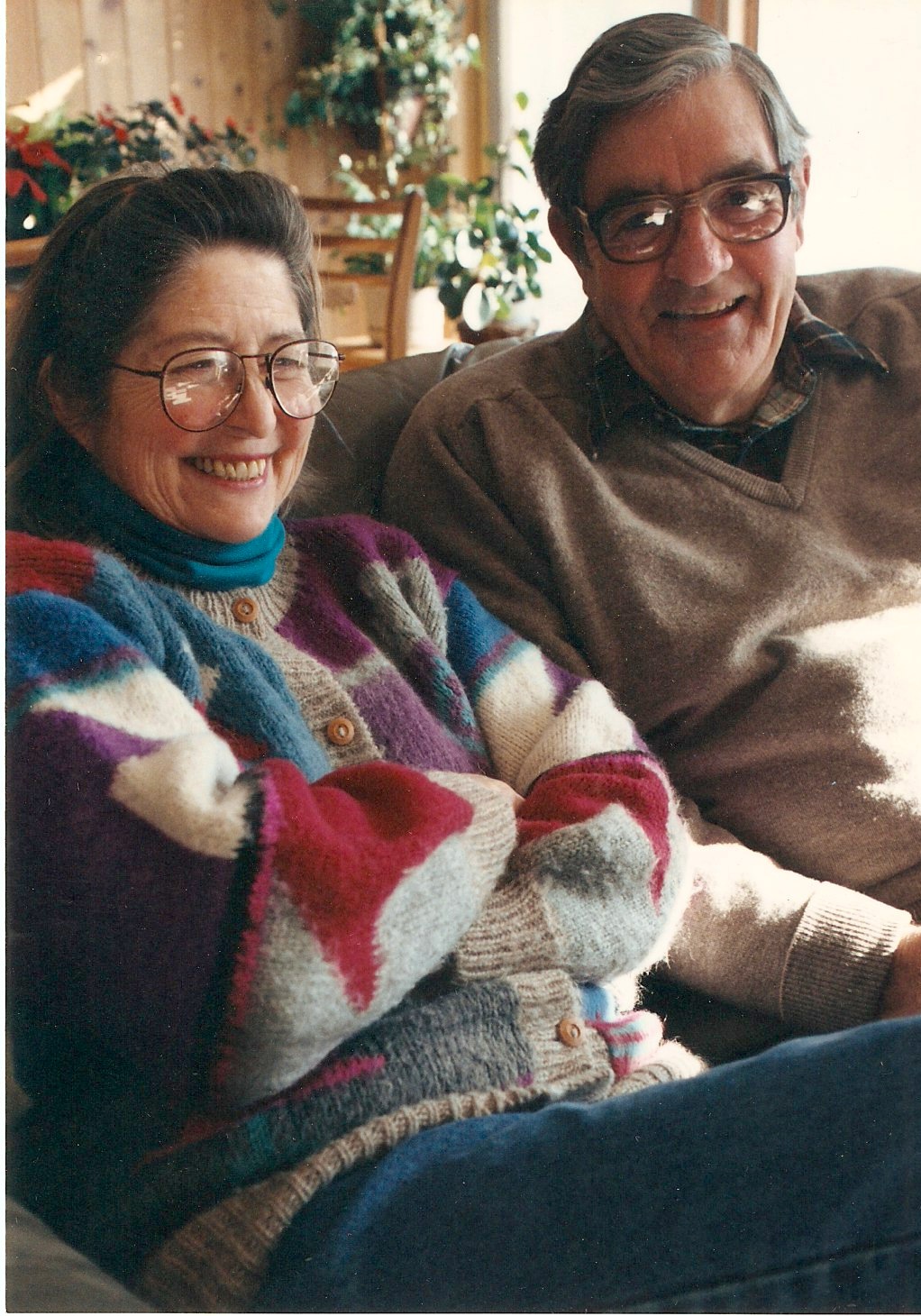
Note: This is the final installment of a transcribed recording from Feb. 1994, when Clay Blair was a guest of the Island Writers Society.
In Part I, Clay spoke about his latest book about German U-boat warfare, and previous books he and Joan collaborated on. In Part II he described his early years as a journalist and writer.
In Part III, below, he responds to questions asked by members of the audience, having to do with writing, and with the topic of submarine warfare. - DP
PART III - AN ISLAND WRITERS GROUP MEETING AT REC CENTER WITH CLAY BLAIR
Question: How do you go about getting an agent?
Clay - This book, for example (holds up a copy of Silent Victory), was published by Random House. The way this works, you have a proposal that you type up and send to your agent, after you’ve talked on the phone. And he may also include ideas before sending it on to a publishing house. They’re not very many publishing houses left. They’re all merging, merging and folding divisions, so that at the most there are only about ten major publishers.
Then he’ll look to see what other books have been published that are similar. They’ll send it on to maybe six editors, within a house, who may be interested in the subject, or the author.
We’re lucky in that we’ve had the same editor for four years, and he’s an absolute crackerjack. He can make commitments without sitting in a committee. So we’ve published with Simon Schuster, Random House, Lippencott.
Question: How does it go from a book to a movie?
Clay - We’ve had that experience twice in fifteen books. It’s a wild crap-shoot.
The best thing I can say for writers is that Hollywood has an insatiable demand for material. I’m not talking about TV, now, but theatrical movies. And the way Hollywood works, is, a project goes into what is called a “development stage.” Let’s say for every 1000 development movies, a few get made. You can get a book option with pretty good option money and have it go into a development stage, at which time a professional screen writer takes your material and begins to fashion it in his own treatment - a screen play which now you have nothing to do with, unless writing a screen play is part of the upfront deal. We wrote a screenplay for a terrible movie.
The normal process is that a book comes out - there are 55,000 books published every year… how about that! - and a tiny few get reviewed. Still a tinier number get on the “best seller list,” such as the New York Times or the Washington Post. But it’s really a miniscule number we’re talking about here. In the whole 55,000, maybe 200 books on the outside, in the whole year.
Normally a book gets on the bestseller list and the lords of Hollywood leap on it. Every book that becomes a best seller that could possibly be made into a movie - even a book like Everything You Wanted To Know About Sex But Were Afraid to Ask, from 20 years ago, there was an option to make that into a movie. That’s how books are made… a tiny bit of them are actually made into movies.
And then, there are movies made that are not released. That was the case with our two movies. They should never have been released!
We’ve been with the same agent for 25 years. Agents have really replaced the image of the old editor with the typewriter, the tweed jacket-type guy who cares about the writer. An agent goes after the best deal because they get 10% of everything you do. And they might even like you, as well…but there’s no assurance of that.
There have been some defections recently, I’ve noticed. Agents die. Ours died. It was very difficult trying to deal with him from the grave. We found a new one, someone in the same firm. Chief agent dies; little guys move up. Our big agent died, who was the biggest agent in New York, really. He dies, and his wife tried to take over the company. She was a flake. All three top agents left and went on their own, so we went with them. You might not follow that editor, but you follow that agent, because he knows where the money is.
Question: How did the German U-boat compare with the American submarine?
Clay - The Americans fought a different kind of submarine war than the Germans. In each case the objective was the same.
The German objective was to isolate Britain and starve it out, and shut down all the imports so that you couldn’t build war machines or conduct war. That was their objective. Our objective was actually the same. That is, Japan was not unlike Britain. Our idea was to draw a noose around Japan, and starve it out. Both objectives were the same.
But the submarine war was fought very differently. Ours was basically a one-boat operation. A boat went out on patrol by itself, and our submarines were big, and quite comfortable, I mean relatively comfortable, and they carried torpedoes and a lot of fuel. You could go out for two months, two months and a half, then return to your base, Midway or Pearl Harbor, or wherever it might be. Germans, on the other hand, had little submarines, about ½ to 1/3 the size of ours. They carried 11 torpedoes, half as many, with terrible habitation. They lived like pigs, no water to shave or shower. They were all stinking, and when you combine that with the smell of a diesel engine in a tiny little boat…the living was just horrible. The food had maggots in it. Just awful.
And their task, all through the war, was to attack convoys in wolf packs, as we called them, anywhere from ten to 40 U-boats. They had arrived at this strategy on the grounds that in WWI we had revived the convoy system of old, and there were so many ships and so many escorts that a single U-boat had a very difficult time with a large convoy.
Our thing worked. We sank just about 1000 Japanese ships. They didn’t sink many ships, but we did. We sank about 5 million tons and a bunch of war ships, and we literally shut down war material and food and such.
We never used the radio. The Germans used the radio all the time because they were patrolling according to official headquarters ashore, the admiral. He’s talking to them all along: “Where are you? How much fuel do you have? How many torpedoes have you got? If you see a convoy, don’t shoot, tail it, and we’ll get more boats in there.” And so all these messages were going back and forth, but we’re breaking their code, we’re reading all this. A lot of the time we knew exactly what they were doing. They were playing with an open hand, like cards in a poker hand.
And besides that, when a boat got in behind a convoy to tail it, they had to send beeping signals to the other boats. We invented radar, which was a factor in all this, a high frequency direction finder, called HFDF (huffduff). These were shore and shipboard high frequency direction finders, so that the minute the Germans sent out a signal that said, “Here I am, guys, home in on me,” we would home in on them using HFDF. So one of the escorts would peel out and either drive that boat under or sink it. Driving it under was good enough, because you could turn the convoy 90 degrees, and by the time that guy comes up – and the Germans don’t have radar, so he can see only about five miles – he doesn’t know where everybody’s gone. Finally the admiral would come in tell them to search a certain way…so all that radio chatter gave us a total look at all their operational directives.
We did not use the radio. Only very rarely did we use the radio.
Question: What was the reason for withholding the information on the submarine warfare for so many years?
Clay - It was a number of things. The main thing was that during the war…first was that the Poles broke the German Enigma machine, and they gave it to the British. And then British were breaking the codes, using machines. The German Enigma was a machine, a machine encoder, and the British developed a machine for decoding. So after the war – the British had mastered a large store of machine coding and decoding. They sold these coding machines to everybody in the world, Indians, South Africans, everybody in the Dominion, and then other places as well. So the British were reading all the codes of all of their surrogate countries, reading all their policy decisions, everything that was going on in these countries, at a time when the Empire was breaking up and any information was quite valuable.
So they didn’t want us to release information that we had broken the code in WWII because their customers were out there banging away on these things. That was one reason. Another reason is, people historically never talk about code breaking. That’s a state secret of very high standing. It’s just not done. We don’t talk about it today, even though we’re breaking everybody’s code all over the world, without a doubt.
I think its fair to say that all code breakers are secret-type of people. All of them. We’ve met quite a few of them, and they’re all reluctant to toot their horn, or say anything, really, because they worked so hard, such a mind boggling thing to achieve this little success, or big success as the case may be, and they don’t want to give it away. Anybody who was in any way ever connected to code breaking took an oath to never disclose anything about it. A lot of people maintain that to this day. I had a close personal friend who was a code breaker who died last month, and he would never talk about it.
Advice for becoming a writer?
Clay - If you’re going to be a writer, it takes a special person to withstand a threatening environment. I instinctively took a route without even knowing it, being aware of doing it. I found myself in New York, I enrolled in school with writers, and I got a job at Time. And actually Time magazine was so exciting, and things were going on there. I started out to be a novelist, but I believe it was Scotty Reston who said, “The 19th century was the age of the novelist. The 20th century is the age of the journalist.” And I really went for that, and became involved in Time magazine operations.
We used to say, “You want to get a job as a writer, get a job on a country newspaper, and you’ll learn everything there is to know about a newspaper.” That’s how all newspaper reporters started out then. How to approach city hall, fires, and so on…
It’s a place where you learn to write, and write and write, and that’s how you learn how to write.
So without the loose screws and the terrible childhood and all that, I somehow gravitated to the very place I should be, which is in a journalistic, threatening environment. And progressed from there.
And so I would say to any would-be writer, go work for a newspaper. Don’t work for an ad agency, because ad agencies are sleaze, and they deal in illusion, not facts. Real facts. Go work for a newspaper. Go work for a publisher. Don’t go to university and teach English. That’s the worst thing that could happen, because it will isolates you into a special group that in most cases lifts you away from life and experiences and puts you away in an ivory tower. That’s not always true, because there are many who have done very well with academic exposure, but again, I say, they’re all writing the same stuff. It’s almost interchangeable.
People say, I want to be a writer. I say, go to work and get a job where you write all day long.
(Conversations with the audience became layered as Clay Blair’s presentation to the Island Writers Society came to conclusion, and voices became impossible to track.) - End - Dick Purinton